
Love doesn’t always look kind
It’s one of the biggest struggles for parents when faced with helping our children in a crisis. In the chaos and confusion and desperation of it all, we get sucked in and in essence we, in our stress and worry and isolation, can get as sick as our children. We want to help. We want to be a good parent. We want this all to STOP. We want to take our children’s struggle and pain away… and yet it seems to go on. This is when WE have to stop and take a step back. Take a pause and a long steady look at what we are doing that is allowing this all to continue. Being afraid of their pain keeps them stuck. When people are in pain and feel stuck, we can feel both paralysed & dependent on whatever we have found that will soothe us, keep us from facing our struggle. For our children that can be alcohol, restricting food, isolating, self-harming. For parents it can be worrying, compensating, burying our head in the sand, justifying. To begin to heal and re-find ourselves and our strength we have to go through it and not around it. It takes huge courage but it is the way forward. As parents we have to ask ourselves, what are we doing, in our fear, to keep our children from going THROUGH it? This doesn’t have to be the hammer blow; it can be quiet but definite small steps which gently help to turn them towards their pain, to see that the path out is through it and ultimately towards the light. We have to steel ourselves and look within and ask, where are we keeping our child stuck? Where is our own fear and anxiety feeding theirs?
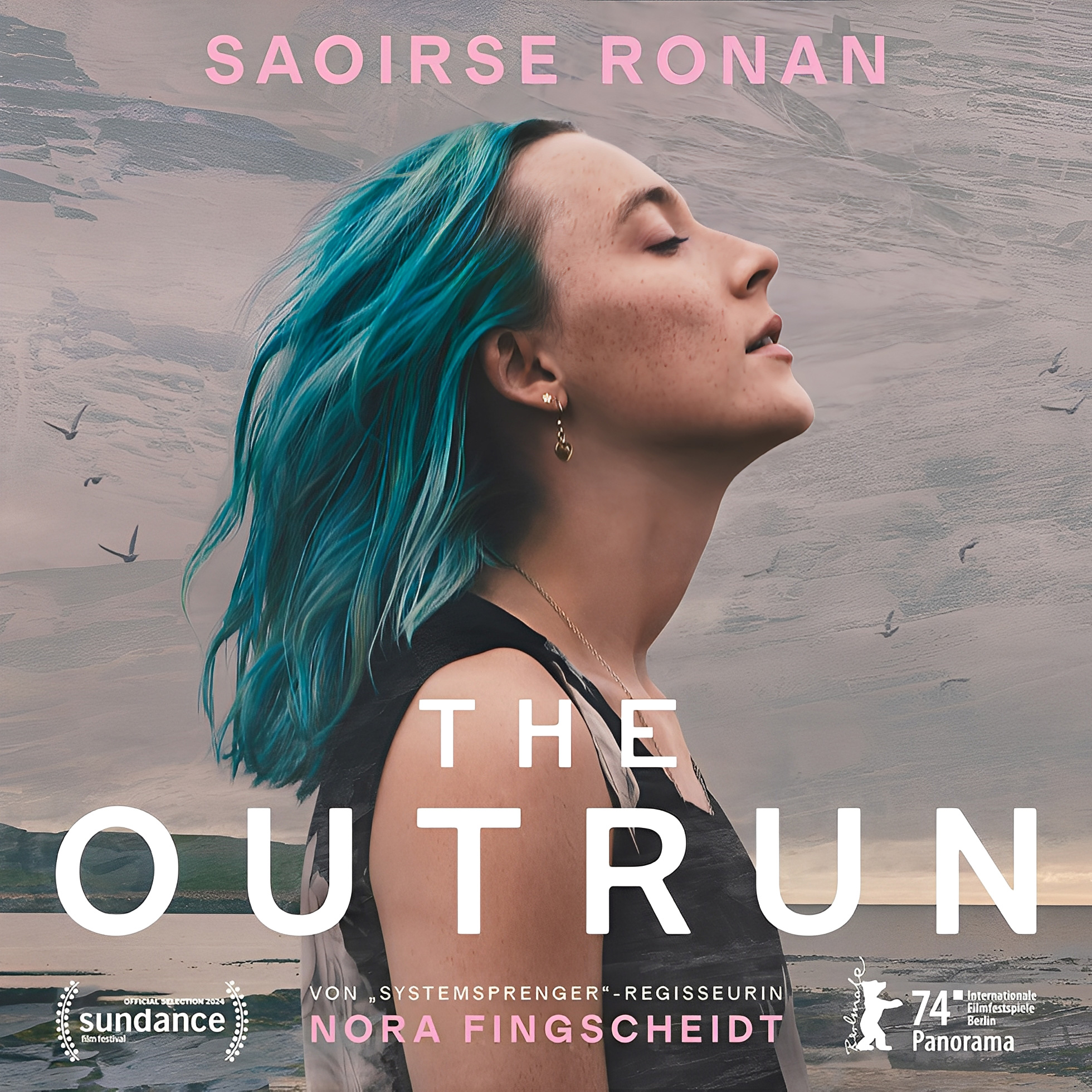
The film of the book The Outrun which we mentioned here some time ago in out now in cinemas to really good reviews, starring the brilliant Saoirse Ronan.
A true story, the film tells the story of Rona, a young woman born in Orkney who has been living in London as a postgrad student, where her joy in her freedom has been succeeded by alcohol abuse and depression. What follows a powerful, inspirational story of her journey back to herself, to Orkney and the wilds of the Scottish Isles where she finds healing and redemption.
“Saoirse Ronan in outstanding in this painful involving addiction-recovery drama, directed by Nora Fingscheidt.”
– The Guardian
“You can almost taste the salt on your skin: clean, gritty, a little painful, entirely exhilarating. Which is what healing is like. Which is how it feels to meet the world, broken and battered and born anew.”
– The New York Times
‘I’m a doctor with ADHD and this is where we’re going wrong’
“We speak to a leading specialist about the link between ADHD, hypermobility and inflammation – and how to excel with the condition”
– this is a really illuminating article in The Telegraph newspaper a couple of days ago, 3rd October. Hopefully you can access it through The Telegraph or via Apple News or your other news provider.
https://apple.news/ANKRBkSsETW2s8lnxPUg-OA
It is an interview with Dr James Kustow, a leading psychiatrist and specialist in ADHD who is Medical Director of The Grove Practice in London, works in the NHS adult ADHD service and is also director of Education for UKAAN, the main professional organization for adult ADHD in the UK.
‘Kustow sums up what the medical community at large has yet to acknowledge: the undeniable yet complex connection between body and brain – supported by emerging studies showing a clear link to physical inflammation and neurodevelopment conditions such as ADHD.’
‘[Kustow] adds, “Personally, I find it most helpful to think of ADHD simply as a disorder of regulation (or a ‘dysregulation disorder’). This aptly describes my personal experience, and that of the many patients I have worked with, where pretty much all difficulties experienced relate back to an issue with one’s ability to regulate….. something.”‘
Below is Kustow’s description of dysregulation from his book,
How To Thrive with Adult ADHD, 7 Pillars for Focus, Productivity and Balance:
The 10 domains of dysregulation
- Attention and executive functioning (procrastination, hyperfocus, forgetfulness, distraction)
- Activity (difficulty staying still, talking excessively, physical and mental exhaustion, apathy, social withdrawal, overexcitement, sexual issues)
- Impulse (problems delaying gratification, disordered eating, self-harming, careless driving, interpersonal conflicts, substance abuse or addictive tendencies, spending money impulsively)
- Emotion (anxiety, rapid mood shifts, quick to anger, excitability, difficulty relaxing, heightened sensitivity to rejection or criticism)
- Reward or pleasure seeking (risk taking, boredom, difficulty inhibiting drives, being in the moment)
- Sensory processing (sensory over-reactivity, sensory under-reactivity, sensation-seeking behaviours, frequent sense of overwhelm)
- Time appraisal (time blindness, time management issues)
- Sleep-wake rhythm (delayed bedtimes, sleep deficient, daytime tiredness, sleep disorders such as sleep apnoea and restless leg syndrome)
- Immune function (heightened sensitivity, increased pain or pain syndromes, fatigue syndrome, more susceptible to infections, allergies, a theme of mast cell activation abnormalities with more asthma, allergy and autoimmunity)
- Arousal and energy expenditure (a “boom-bust” pattern of energy expenditure, physical and mental exhaustion, blood sugar problems, perfectionism, motivation issues)
September Talk Review
Many thanks to Yonit Blumenthal, co-Founder of Journey Recovery Center in South Africa, on her brilliant talk, Treading the Delicate Line between Supporting & Enabling.
Her message speaks to the opening message above, ‘Love doesn’t always look kind.’
Yonit’s teachings were powerful and clear, as a result of her training but also, perhaps more significantly, due to her own experience of living with and loving an addict and being being part of a recovery process for them both and from speaking to so many people and their families over years.
Her talk can be found here.
She asks,
‘Is our protecting them helping them or enabling them?”
‘Are we empowering them to take responsibility or taking it on ourselves?’
‘Is your child controlling or dominating the whole family?’ … ‘ Then this is a clear message that it is not OK.’
We really urge you to listen to this talk to help give you the power again to listen and respect your gut instincts as a parent and to follow the courage of your convictions, which so easily get skewered and lost in these difficult and highly stressful times.
If you would like to be in touch with Yonit, please do email her at yonit@icon.co.za
Yonit also read us all a poem about Letting Go that many of you asked for and she has kindly shared with us.
LETTING GO TAKES LOVE
To let go does not mean to stop caring, it means I can’t do it for someone else.
To let go is not to cut myself off, it’s the realization I can’t control another.
To let go is not to enable, but allow learning from natural consequences.
To let go is to admit powerlessness, which means the outcome is not in my hands.
To let go is not to try to change or blame another, it’s to make the most of myself.
To let go is not to care for, but to care about.
To let go is not to fix, but to be supportive.
To let go is not to judge, but to allow another to be a human being.
To let go is not to be in the middle arranging all the outcomes, but to allow others to affect their destinies.
To let go is not to be protective, it’s to permit another to face reality.
To let go is not to deny, but to accept.
To let go is not to nag, scold or argue, but instead to search out my own shortcomings and correct them.
To let go is not to adjust everything to my desires, but to take each day as it comes and cherish myself in it.
To let go is not to criticize or regulate anybody, but to try to become what I dream I can be.
To let go is not to regret the past, but to grow and live for the future.
To let go is to fear less and love more.
Remember: The time to love is short.
(author unknown)
October Talk
Wednesday 23rd October @ 6.30 – 7.45pm UK time
Lies Deseyker, family therapist at Yes We Can Youth Clinic, will talk to us about:
MAINTAINING UNITY & COMMUNICATION AS PARENTS Unity & Communication as Parents
– as parents we know how intensely challenging it can be to maintain unity, connection and understanding with the other parent (or perhaps extended family), when we are trying to find a loving path towards wellness and recovery for our child
Lies has worked with hundreds of parents in this situation over many years and she will bring her considerable experience and skill to addressing this subject