
Family time…
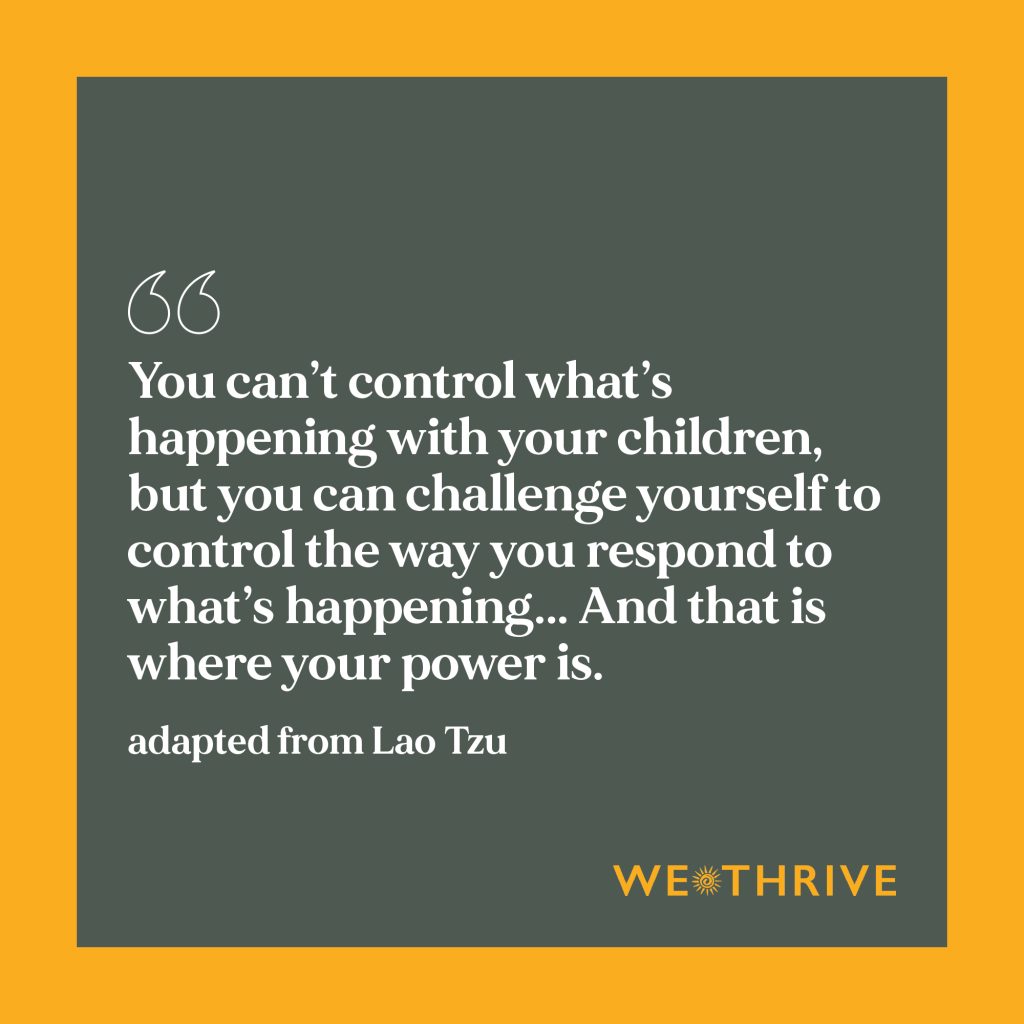
We are hoping everyone has had some sense of ease and rest over the summer. Here at We Thrive, we try to honour this time too and settle into a slower pace. For many, the long summer may not have been easy, despite the glorious weather here in the UK and that can be made even tougher by images, stories and perhaps being amongst friends who seem to be enjoying happy family times. Holidays and family time may be fraught, fractured & even untenable. We may have a child in the heat of crisis, receiving treatment, in medical care. As a parent who is acutely aware of how this feels, being in that place myself a few summers ago, I am reminded as I write this sitting on the plane with 2 of our 3 children with us and the other joining later today, how all things evolve. I look at them, in all their individuality, challenge and beauty, and I am aware of the adage that nothing ever stays the same, but when we are in a painful time, we can forget that really this won’t last forever. Remembering this, helping each other to remember this, to share our stories, can really help to ease our feelings of panic, paralysis, fear, despair (and a host of other feelings). This in turn impacts how we respond to what is happening NOW and, of course, this will then impact how our child feels about themselves and their current situation. We hold the ground that tells them, despite how it may seem right now, that they are ok and all is going to be OK. This is a profound message and is at the heart of why We Thrive exists.

Reflections after the family holiday…
Watching my three children lying together in a jumble on the beach, laughing, joshing, taking the mickey (always), all talking at once (mostly) I was again acutely, almost tearfully, aware of how wonderful this was, how much I love being with these three humans and also acknowledging how deeply challenging I can find it. The fact that we could even countenance going on a family holiday ( just us) & that we all really wanted to, was in itself a huge landmark. A giant leap forward and something that I realise an awful lot of families don’t ever get to. Does it mean that our 5 days was idyllic… absolutely not. In a neurodiverse family (and I would probably count 4 out of 5 of us in that, a question mark on the fifth!), emotions, reactions, feelings are BIG. There is a lot of energy, impulsivity and equal amounts of sensitivity … to noise, to moods, to changes in plans, to other people’s needs and feelings, to busyness, to change, to external stimuli. There is a dearth of… personal space, tolerance, conversational ease, peace, patience, self- and other-awareness, delayed gratification. It can be a powerful and sometimes explosive cocktail. We are all learning as we, and they, grow to understand what works and what doesn’t, to respect our needs and accommodate each other because it is really WORTH IT. We can really enjoy and treasure each other’s company and also find it unbearable, but in the end we truly know we have each other’s backs, that we ‘get’ each other and will always be there. Does this mean we want to live together or share daily life? Not necessarily now, as they are becoming adults and moving off to live their own lives, but the thread of family & all that we have experienced together is gold. This love is a long game and will be constantly evolving – and I feel incredibly grateful for it.

Rudi Voet’s talk in August on “How parents can best support each other and themselves”
Rudi’s key message, after many years supporting parents, is that in the end there is no ‘right’ answer, no ‘right’ way; that the sharing of lived experience is probably the most valuable tool there is for healing. We are human after all, not robots. When we, as parents, start opening our hearts and minds to the possibility of seeing and listening to what lies beneath the misbehaviour, the substance abuse, disordered eating, isolation or whatever may be present, we open up a channel for connection and repair, and perhaps living a way of life more nourishing for the family as a whole.
Rudi is very happy for people to contact him, should they have any questions, or concerns they would like to discuss. He can be contacted via Whats App on: + 31 654905464
To Read:
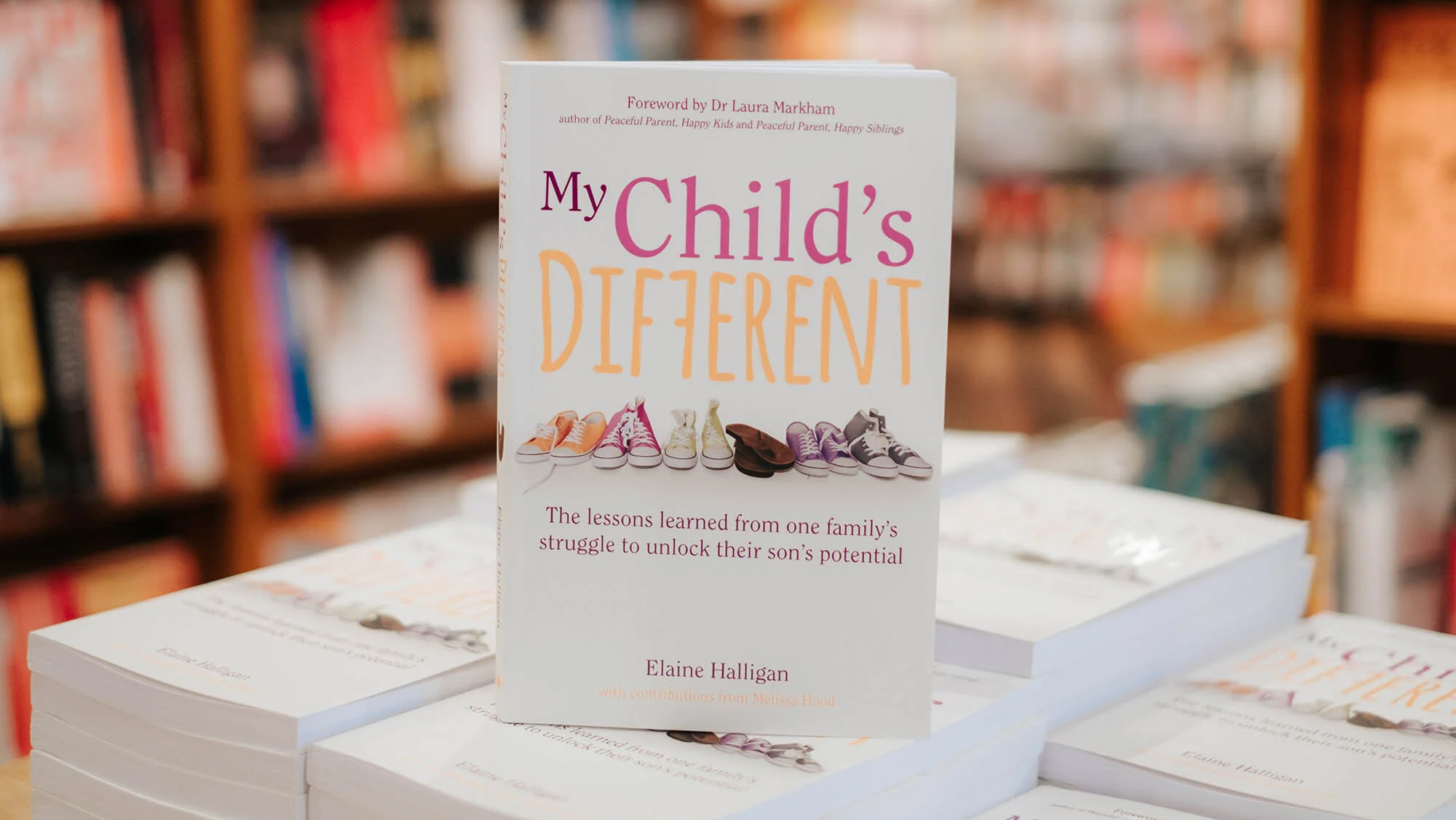
I have been reading Elaine Halligan’s book, My Child’s Different, which ‘draws lessons from the transformational journey of a young man who was written off by society but went on to become a budding entrepreneur…. The book explains the enabling role that parents can play in maximising the potential of children who are seen as ‘different’ or ‘difficult’. With labels such a dyslexia, ADHD, PDA, ODD, SID and DCD, this book will help you support your neurodiverse child and unlock their potential.’
The following extract from the book really spoke to me, and to why We Thrive as a community, and also the courage and tenderness to reflect on our own family cultures, can be so helpful:
‘We all do what we think is right for our children. We love them equally but need to treat them uniquely according to their needs. Sam’s needs were very different from Izzy’s, which is why the behaviour modification approach was required. We were desperate, but, being the eternal optimist that I am, I was always hopeful that there was a solution. I continued researching and exploring. I kept an open mind, I asked for help, I listened to advice. I now believe this was the key that allowed me to problem-solve at last.
I’d thought that parenting didn’t need to be taught, that raising and nurturing your children with love was the most instinctive activity in life. How my view has changed! I learned that parenting is a deeply conditioned state that is based on our own experiences of being parented, which may of may not have been positive. But add to this a child with an intense, sensitive, impulsive temperament, and suddenly things become much more complicated.’
Elaine has her own website where she offers 1-1 coaching and also a group parenting programme, www.elainehalligan.com

To Watch:
Many of you may have seen this BBC2 series, Inside Our Minds (it is accessible through BBC iplayer) but if not, it is a great series of four, presented by Chris Packham, who talks to both professionals and people experiencing these conditions. There is on on ADHD, one on dyslexia and two on Autism.
September Talk
on Wednesday 17th September at 6.30
Chloe Maxwell, coach,
will speak to us on the questions:
‘How am I really? What do I need? What am I struggling with?’… with the fundamental premise that we can’t support the ones we love we are
when we are running on empty?
Chloe Maxwell – www.chloemaxwell.com, is an accredited resilience coach with a background in positive psychology, CBT, mindfulness,
somatic awareness and emotional intelligence. She offers tailored, evidence-based strategies to help you find your peace, build self-confidence, and succeed whether you are under pressure or in a moment of calm — ‘because you don’t have to settle
for just surviving; you’re worthy of so much more.’