
When we realize we are neurodivergent too…
Perhaps for some of us, we may have started to look at our partner or ourselves in a slightly different light. A new perspective or insight unfolds – when you can see how you/they too find eg social interaction hard, get easily overwhelmed by organisation and planning, maybe rely on alcohol to enjoy certain types of social gatherings, forget things all the time, find it unbelievably hard to get going with and maintain work and tasks that require protracted endeavour, can be easily hurt and reactive with loved ones, are sometimes super focused and at other times floundering in a thick, mental fog, feel highly sensitive to any criticism, struggle with self-belief, seem extremely empathetic or conversely struggle to understand/read other people’s emotions/perspective and….. it could go on. I remember going to a talk at my children’s school many years ago on neurodiversity by a very well-respected figure on the subject. The room was packed. Parents looked at each other with a wry smile, a nod, a laugh of recognition as it became clear whose children were somewhere on the spectrum. Suddenly we were all comrades. The speaker came on to the stage and the first thing he said was, ‘So, mums & dads, which one of you do you think is neurodivergent?”… What???? Everyone shifted uncomfortably… A nervous laughter fluttered around the room. Husbands and wives, partners, looked at each other – Not me! And then he followed this up by saying that it’s almost certain to be at least one of us and quite likely both.
Let’s clarify that neurodiversity includes dyslexia, dyspraxia, autism, ADHD, dyscalculia, dysgraphia, amongst a whole host of subtleties. Hopefully in the not so distant future we won’t be speaking about neurodiversity but instead acknowledging the breadth of all human experience, skill and limitation as qualities to be nurtured and championed for a healthy, diverse, functioning society. In the meantime, it is understood that most expressions of neurodiversity involve challenges with what is known as executive function (a set of mental skills that help a person plan, focus, remember instructions, adapt to new situations, solve problems, prioritize and multitask successfully) and very often issues with social communication. It is a complex matrix of many facets which looks specific but shares commonalities in each person. And conversely we all know that the positive aspects can lend themselves to incredible creativity, ingenuity, single-mindedness, specific areas of skill and sometimes genius, extraordinary feats of daring and adventure, engineering, inventiveness and insight.
Going back to the (shocking!) question on the school stage: this idea wasn’t news to me. Many years before in my 20s, when I had been seeing a psychologist to help with the anxiety I was struggling with, he, after a few sessions, said, ‘I think I may know the root of some of these issues you are having. Here is a form – have a go at filling it in.’ I ticked practically every box. It was my life on two sides of A4. ‘Yes’, he said, ‘I thought as much. You definitely have ADHD.’ Now this was back in the 90s when ADHD wasn’t the buzzword it is today but I knew something about it, and I laughed, recognized it, but really did nothing more about it other than to park the knowledge as offering some explanations for some of my struggles. Why didn’t I do more? Really address it? Take action? Medication frightened me (in our family we had been brought up to think of medication as a bit of a devil) and to talk about it seemed shameful. ADHD was barely known beyond medical circles, mental health wasn’t discussed. If there was a problem there must either be something wrong in my external world or, and it didn’t seem like there was, I was ungrateful, indulgent ‘given all you have been given, everything that you have.’ Just get on with it.
I get it. It’s not easy and it was definitely less easy for every generation before us. But the greatest gift we have now as parents is the more open discussion and clearer understanding about all this. Of course we now know it doesn’t matter how much you ‘have’ eg money, education, academic ability, stable home life, sporting prowess, good looks, lots of friends – if the biology and the spirit are struggling, the only thing this does is to pile guilt and more shame onto an already baffling and lonely experience. We now have the power to change these family stories and approaches, to be able to share with our children some of our own struggles and also the joys of our particular and unique human composition. We can move from being the parent who always knows best, has got it all together, has to have answers, to being a human being who is learning all the time, making mistakes, trying again; learning to live in a way that feels true and supportive, to surround ourselves with people who we can be really ourselves with, choose the environments, work, activities that nourish us and bring us joy, in essence uniting our outer worlds with our inner worlds. Many of us spend years, sometimes whole lifetimes, with a deep fracture between both. When we learn to find this, we are leading the way for our children to heal this divide.
I Am Not Defined By My Past: My Recovery Story
by Jen Sugermeyer
October 12, 2022
My addictions almost took my life. After 23 years of struggling with substance use disorders, I was so beaten down and tired of the madness that I started to think through scenarios that would end it all. I was afraid to live. I was afraid of death, but I wanted to die. I felt paralyzed and owned by a force that I couldn’t get my arms wrapped around.
Finally, I found myself smacked in the face by the recovery stick. It turned my entire world flipped upside down. But understanding what recovery actually meant, and the power it gave me, did not happen overnight.
In the beginning of my recovery, and throughout my addiction, I was ashamed of who I was and the person I had become. I believed addiction was a weakness in my character. I thought I was held back from opportunities, and I would never be good enough for certain situations.
Recovery taught me that I couldn’t have been more wrong about all that.
As I progressed in my recovery, I realized that I am not defined by my past. Instead, I found that every negative thought I had had about myself was actually a component that made me into the incredible person I am today! I realized that I had the strength of an ox. After being torn apart for so many years, I found that nothing new could tear me down. I never knew true happiness until I bounced back from the most challenging experience of my life: My addiction. I became more than enough for every situation. I started to see myself as a valuable asset in all situations.
Before recovery, I never knew how strong I actually was, and how much I could help strengthen others through telling my story. I never knew how incredibly amazing I was, and it was inside of me the whole time—I just needed to learn to love myself. And I found that in my recovery.
If it weren’t for my experiences, horrible as they may have been at times, I don’t believe I would have discovered the strength, beauty, and positive outlook I have on life today. My past strengthened me for the incredible journey I started when I finally entered into recovery.
Recovery is not just the absence of an addiction. It’s recovering and rediscovering the person inside—and for me, that has been the most empowering and incredible part of this journey! It’s all about the chance to rediscover who you are. It’s about taking all of those pieces in your life that appeared to be shattered and bring them together again. It’s about making yourself shatterproof.
Jen Sugermeyer is a Shatterproof Ambassador based in Texas.
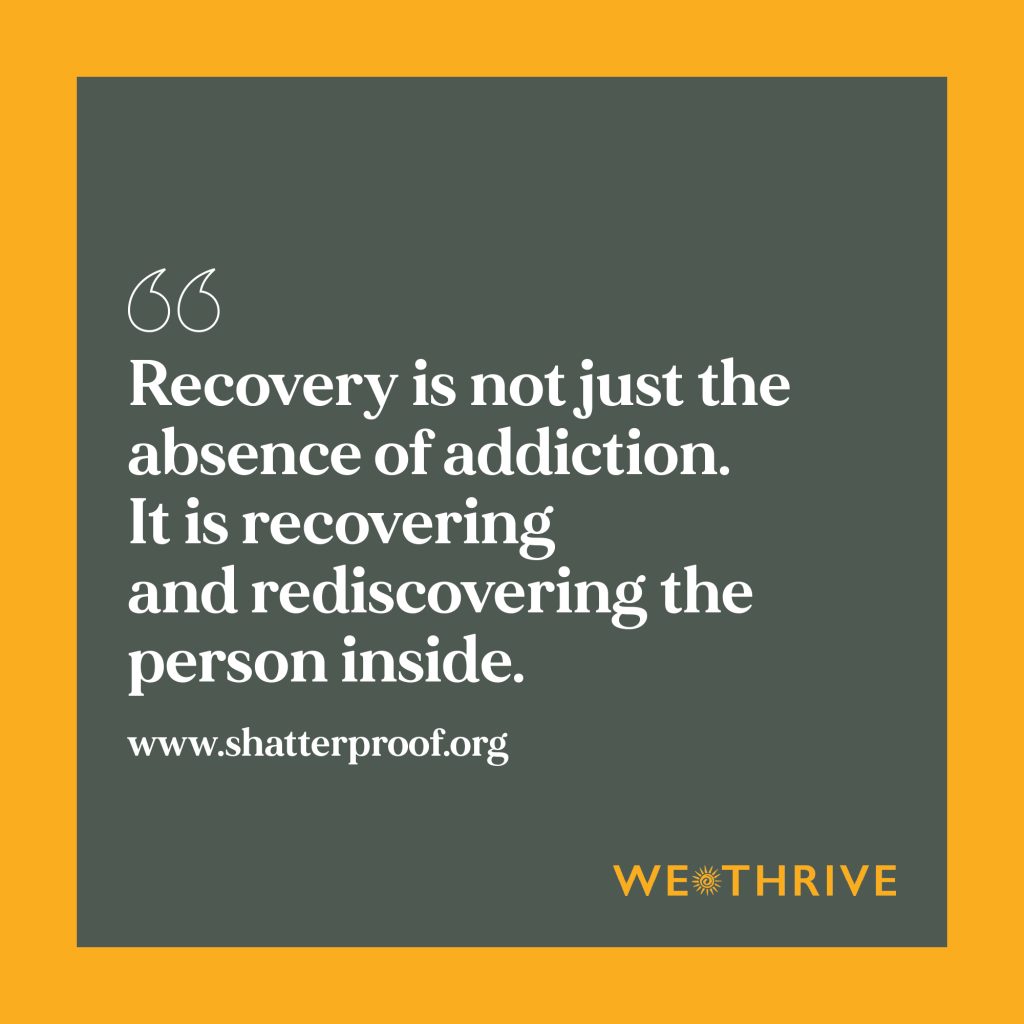
A Story of Recovery from Shatterproof, www.shatterproof.org, an organisation in the U.S which helps enhance understanding of and help for addiction. There is a line towards the end of this, ‘Recovery is not just the absence of addiction. It is recovering and rediscovering the person inside,’ that really reflects on the piece above about the importance of finding peace with who we are, living in a way that is true to ourselves and the ability to give that to our children.
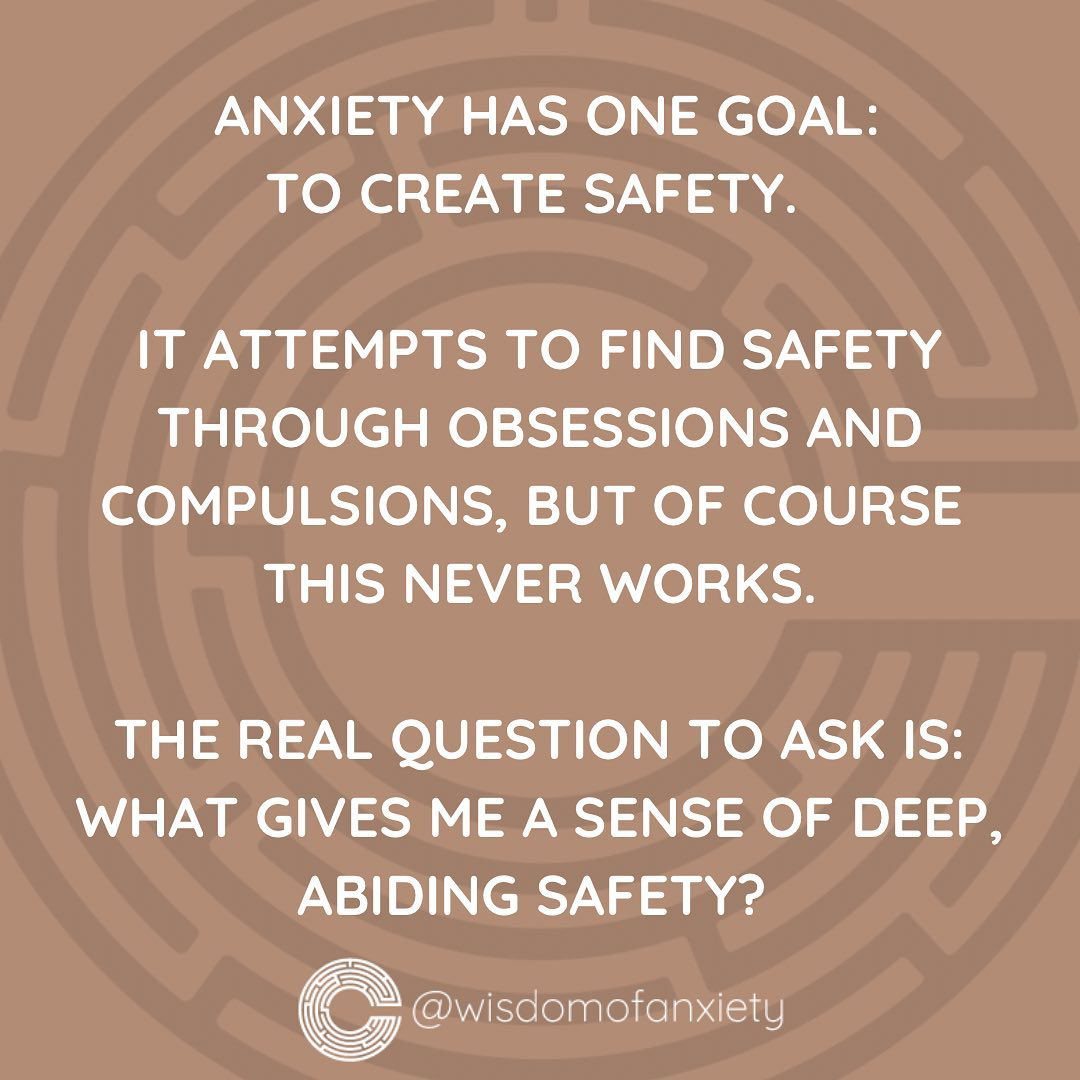
This is a good message about anxiety & why it exists. Anxiety serves a purpose; it is there to alert us, to wake us up, to protect us. It provokes us to ask some strong questions.
January in-person gathering is on:
It was wonderful to see everyone who came last week to this and we will host another one in the new year on January 8th at 10.30 (to put in your diaries!). Location to be confirmed.
Next Psychosis support group will be on:
Monday December 1st at 6.30pm
- Please do pass on to any parents/families you know who may benefit from this and we welcome too any ideas for topics you would like to hear about or any speakers you might like to invite/suggest.
- A link will be sent closer to the time.
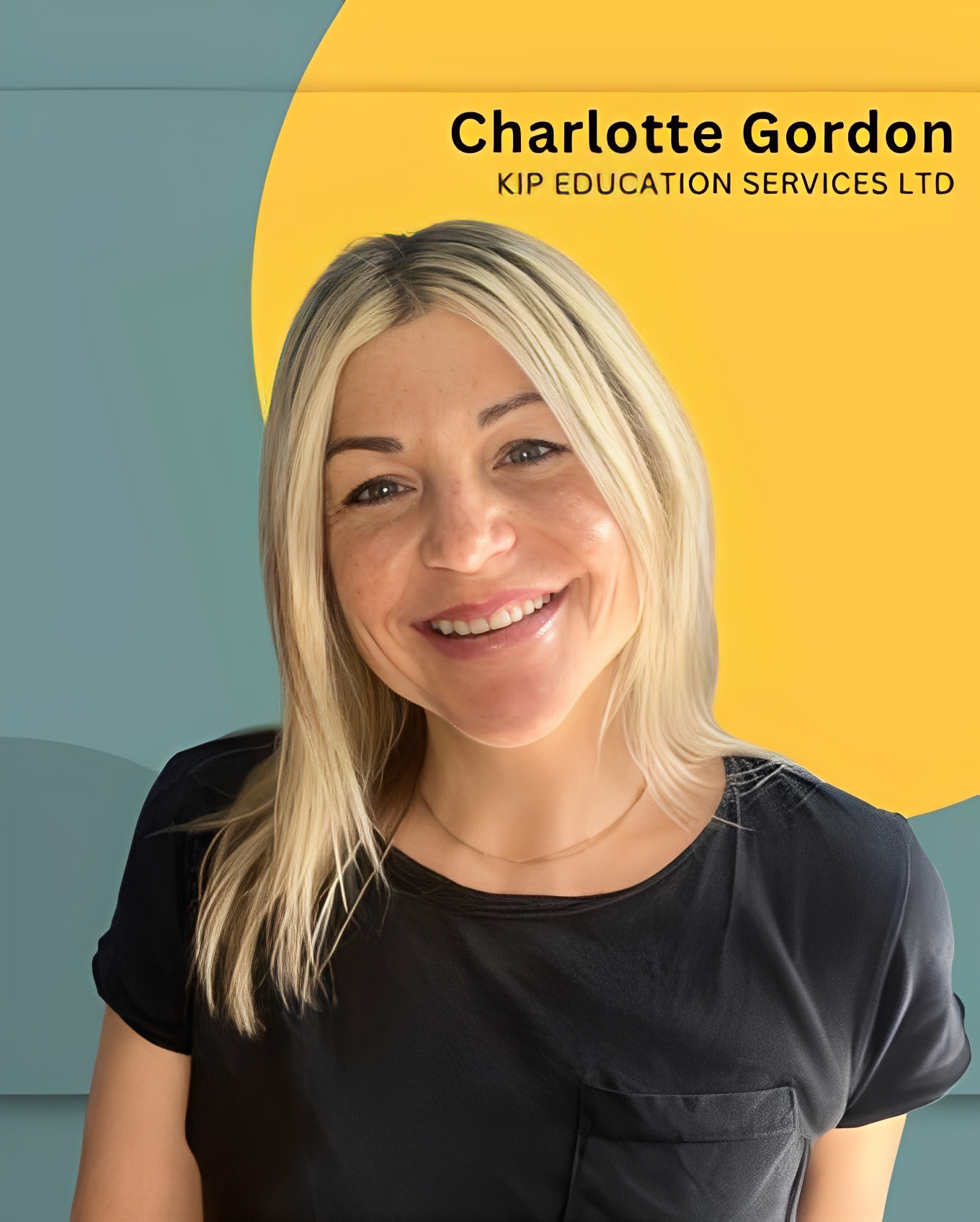
November talk review:
Charlotte Gordon of Kip Education
www.kipeducation.com
Charlotte gave such an inspiring presentation about her own challenges growing up, how she began to understand and heal herself, and ultimately about how she brings this lived and acquired knowledge to help young people today. As she says, ‘At Kip Education, we envisage a world where mental health is understood and openly discussed. Our goal is to empower young oeple an their support networks with the knowledge and tool to prioritise and nurture their mental health and well-being.’
Charlotte began to self-harm at 9 years old and this was followed by struggles with alcohol and substance abuse as a coping mechanism to manage feelings of being ‘too much’ or ‘not enough’ and not much in between, never feeling like she really belonged or fit in anywhere.
She clearly highlighted that what adults saw: Defiance, Poor Choices, Behaviour to be managed were just outward, desparate reactions to regulate how she felt inside: Desperate distress, Internal chaos, A need for calm.
There was no OFF button in an overactive brain and a feeling of ceaseless internal chaos.
As a mother now to two children with whom she has storng connection, she asks, How can we help? Here is her list:
- Avoid labelling
- Embrace their sensitivity
- Accept and believe them
- Validate and empathise
- Prepare for challenges
- Set limits
- Provide rewards
- Support problem solving
- Correcting behaviour
- Emotion coaching (which can include breathing exercises, grounding exercises, taking a break, calming toolkit, identifying feel-good activities, understanding the brain..and always START WITH YOURSELF FIRST!)
Aside from supporting youth in education, the team at Kip also support families and young people in an individual capacity, so please do be in touch with Charlotte if you would like to know more: charlotte@kipeducation.com
December Talk
on Wednesday 10th December at 6.30pm
Dave Noble & Sacha Kent will lead a gathering together as a community to reflect on the year: the recovery, healing, learning, challenges and the power of sharing our experiences as a vehicle of strength and hope.
We hope you will join us to see the end of the year together and acknowledge the progress we
have all made.

From us all at We Thrive, we know that Christmas can be (and has been for us in the past) a very challenging and painful time when we have a child who is struggling and the family seems fractured, so for those of you who feel that they are in the fire right now we will hold you very much in our hearts and can only say that, in our experience, we are now in a position to look back at that fire and see how far we have come. It doesn’t mean there aren’t challenges, but our recovery is ongoing and there is a lot of love and compassion and gratitude where once there was disconnection, discord and deep distress. Hang in there – you are not alone. You are part of a tribe of truly wonderful, special people with big hearts and bigger spirits.