
Hello everyone,
Here we are in a new year, in the darker days of winter which for some can be very hard. Somehow this year particularly I seem to have leant into the slower pace of winter, enjoying the cosy evenings, making things, winter walks, fires lit, taking time to read, to write and have tried to welcome and honour the quiet feeling of it all. There is so much talk about honouring the seasons & this year, true to my core intention for the year, I have tried to actually live it. This core intention was really a question to myself, ‘Am I living a life in line with my values/with what matters most to me?’
As a parent, we are often so busy with the demands of work, life, managing, giving, caring that we rarely take a moment to reflect. Sometimes what we needed or valued ten years ago has changed. As a parent in situations where the intensity is dialled up to a heightened pitch practically, emotionally, psychologically, this window of reflection gets smaller.
What I need right now is a reflection of hard-won learning, of the life that I have now which perhaps wasn’t what I foresaw or imagined and I am truly beginning to understand this. This means for me, stepping out of my default to take on more which can sometimes be about running away from difficult feelings -being busy means not having to think about what is happening and it’s also about feeling valued when you feel your world or your competency as a parent is being really questioned. Being more considered about what it is I do take on gives me the space to ask: What is the most loving way I can be a parent right now? At this time for me, I know that being a parent demands more than it might for some others – more learning, more care, more clarity, more internal stability, more compassion, more time, but also more resolve, more courage and space for joy, fun, friendship, nurture. When I fight this, the whole ship gets rocky. It’s a daily challenge and a daily question when you are in a challenging dynamic. It’s not a hard line with a hard answer, much as I might like it to be.
In the last few months my youngest (15) who is on the Autistic Spectrum, has ADHD and also is plagued by horrid OCD type anxiety, has had some bumpy times. He is hitting the teen energy alongside all that goes on for him; he has become a lot more isolated and whilst this is worrying, he is immovable to suggestion or help, most of all when he is struggling the most. I have learnt however to stay much steadier than I might have previously done, I can zoom out a little and see how much people, circumstances, situations can change over time. I can be clear with him on what we can do to help, how we are always open to support him but also where he is responsible. I can be gentler and calmer in my approach while remaining steadfast to what we cannot do for him. I understand more clearly about my role and my capacity as a mother and a human being and where, in my fear and desperation, I have overstepped this to everyone’s detriment. It’s been quite a revelation and I feel really strengthened by it. I don’t know how our situation will unfold, how our son will find his way, but I am now so much surer of the role I have in it all. Looking after my sorrow or fear, the exhaustion and the worry is important and I take this more seriously than perhaps I used to. I do this in community with all of you as well with some special friends who really get it, in Al-Anon, through meditation and yoga, having fun, being in nature, staying close to my interests, working on my own challenges. Like most things worth having in life, the benefits don’t appear overnight but in this new year I have begun to feel some real shifts and am more aware than ever how important a community of fellow travellers is to foster these changes. From my heart to yours, I am truly thankful for all of you who have shown up and been brave enough to share your vulnerability and also strength to light the way ahead. Hoping that 2026 may bring you peace and ways to nurture and honour yourselves.
A good listen:
The Autism Curve
This is a 5 part series originally aired on BBC Radio 4 in the UK in May 2025 & now available on BBC Sounds App.
It’s presented by Michael Blastland who himself has a son with severe autism and he offers both a compassionate & considered look into the rising cases of diagnosed autism whilst interviewing various professionals, researchers & writers in the field.
His concluding summary is here:
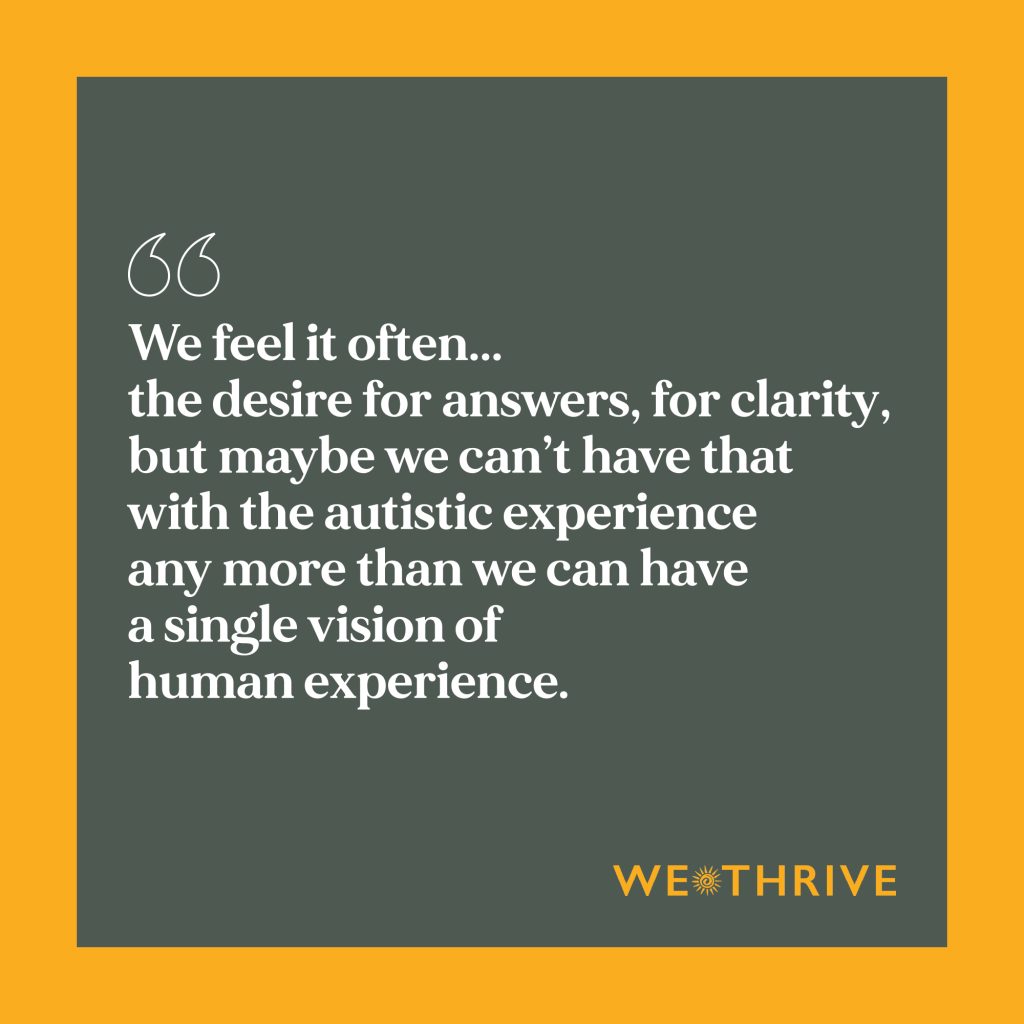
‘We feel it often.. the desire for answers, for clarity, but maybe we can’t have that with the autistic experience any more than we can have a single vision of human experience. So the surprising conclusion of a series that set out to understand the numbers and their meaning is that maybe we should ease off the definition of heartache. Definitions matter – they are just not going to settle things the way we would like, not when autism has become socio-political as well as medical. You can’t expect one word to do that much and be precise. If defining autism is tricky, counting it will be too. The numbers won’t tell us as much as we would like. Maybe ease off the causes a little too; the causes are overwhelmingly genetic but the genes are fantastically complicated, probabilistic and uncertain. Diagnosis can be variously a step too far, blurry, essential & transformative, all of these. So our final conclusion is about being different. Being different is not defined by how I alone am different. Difference doesn’t stop, not with me, not with my son, not with you, not with anyone. None of this means give up or stop researching, diagnosing, listening, blogging or organising or helping any more than we give up trying to learn about human experience but perhaps we are learning more about variety and complexity and more of the limits of clarity, and maybe what that teaches us through these remarkable decades of change and discovery, is humility.’
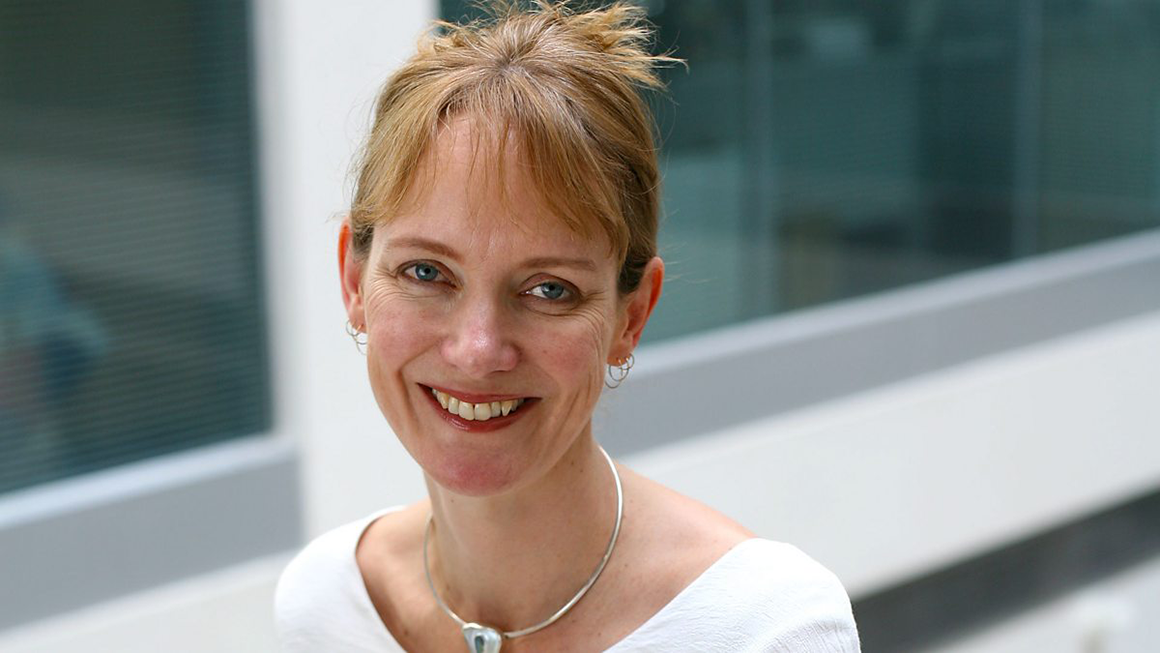
In that same episode, Michael Blastland consults Francesca Happé, Professor of Cognitive Neuroscience at Kings College London who has studied autism for nearly 40 years and her approach to diagnosis and neurodivergence, reflects a belief I have long held ie that difference is typical, we are all different; the troubles begin in how society, education, our loved ones and then ourselves, respond to that. It’s how we internalise that experience.
Happé: ‘Certainly we should think about what diagnosis does and what it is necessary for. Currently it’s pretty necessary in most parts of the country for your child in order that your school can get further resources to support you but actually as an adult you can ask for reasonable accommodations at work without having a diagnosis, so actually I think an increasing number of people are choosing to self-identify without seeking a diagnosis, and that is going to change things because we may well already be at a point where there are more neurodivergent self-identified people than there are neurotypical. There certainly are in my family. So once you take autism, ADHD, dyslexia, dyspraxia, all the other ways that you can developmentally be different from the typical, you actually don’t get many typical people left. That’s going to change society but not in a bad way.’
ALL Meetings are now on the same link
This is just a reminder that, for ease of use, all meetings, support groups & talks will be on the same link (unless otherwise stated). The link is here below so hopefully you can keep a note of the Zoom ID & Passcode for it.
Calendar link
Join Zoom Meeting
Meeting ID: 857 5990 6710
Passcode: 083103
Thursday morning meetings every 2 weeks
This year we are resurrecting our Thursday morning offering every other week to be able to include those in different time zones and anyone for whom this time might work better. Please always check the website, www.we-thrive.org.uk, for dates.
The time will be 10.30 – 11.30 am

Next in-person meeting date
The next in-person date to meet up in London is
Thursday March 5th at 10.30 a.m
at Carluccio’s in South Kensington (2 minutes walk from the tube).
As ever, would be lovely to see whoever is able to make it!
Next Psychosis Support group meeting:
Monday 9th February 6.30pm
“My good fortune is not that I’ve recovered from mental illness. I have not, nor will I ever. My good fortune lies in having found my life.”
― Elyn R. Saks, The Center Cannot Hold: My Journey Through Madness
Elyn R. Saks is an American legal scholar who is an associate dean and Orrin B. Evans Professor of Law, Psychology, and Psychiatry and the Behavioral Sciences at the University of Southern California Gould Law School, an expert in mental health law, and a MacArthur Foundation Fellowship winner.
February speaker
On Wednesday 4th February at 6.30pm
This month we are reviving our Parent Speaker slots which we did a lot in the early days of We Thrive in 2021 & 2022 and they were always some of the most helpful and powerful meetings, because they are a true reflection of the core mission of We Thrive – healing and recovery through community and lived experience.
Jenny has very kindly agreed to share her family story, giving a history of events, how it has impacted the family but most importantly about the invaluable support we have had in terms of scaffolding and trust in letting go.?
THESE TALKS WILL NOT BE RECORDED TO PROTECT CONFIDENTIALITY, so if you are interested please do put the date in your diary.